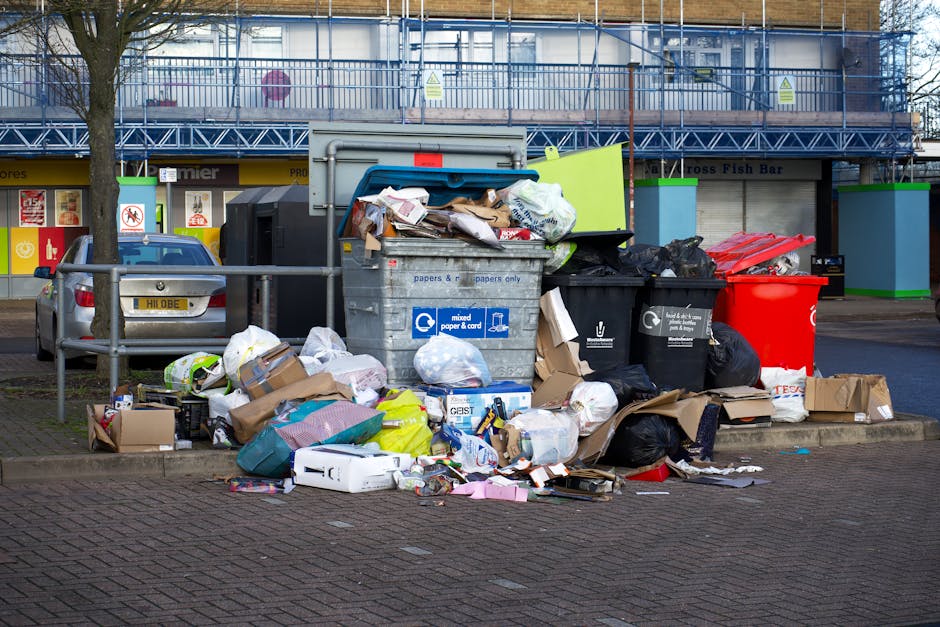
Avoid hidden rubbish removal charges in Chelmsford CM1: a practical guide to fair, transparent pricing
If you are trying to avoid hidden rubbish removal charges in Chelmsford CM1, you are probably doing what most sensible people do: comparing prices, checking the small print, and wondering why one quote looks suspiciously cheap. Truth be told, rubbish removal can be straightforward, but the pricing sometimes isn't. A "great deal" can turn into a frustrating bill if the company adds extras for access, labour, disposal type, or things that were never clearly explained.
This guide is here to help you spot the traps before they catch you. We'll look at how rubbish removal pricing usually works, where hidden charges tend to appear, what to ask before booking, and how to choose a provider with clearer terms. You'll also find a checklist, a comparison table, and a practical example so you can make a decision with confidence rather than guesswork.
Why hidden rubbish removal charges matter
Hidden charges are more than an annoying surprise. They can change the whole value of the service. A quote that looks affordable on a quick phone call can become far less attractive once the crew arrives and starts adding fees for "extra weight", "difficult access", "stairs", "urgent collection", or items they say were not included. You know the feeling: the van is outside, the rubbish is piled up, and suddenly you are making a decision under pressure. Not ideal.
In Chelmsford CM1, where homes, flats, offices, garages, and rental properties all generate different kinds of waste, pricing should reflect the actual job clearly and fairly. The main issue is not that all extra charges are bad. Some extra costs are legitimate. The problem is when they are vague, undisclosed, or only mentioned after the work has started.
That is why a clear quote matters so much. It gives you control. It helps you compare companies properly. And it protects you from paying for poor communication. If a provider is transparent, you should be able to understand exactly what you are paying for before anyone lifts a bag.
Expert summary: The safest way to avoid surprise rubbish removal fees is to get a written, itemised quote, confirm what is included, and ask how the price changes if the load, access, or waste type is different from the initial description.
How rubbish removal pricing usually works
Most rubbish removal pricing is based on a combination of volume, labour, waste type, access, and disposal costs. That sounds simple enough, but each of those parts can shift the final number. A sofa in a ground-floor room is one thing. A sofa in a loft conversion with a narrow staircase is another. Same item, different job.
Typical quote structures may include:
- Volume-based pricing - often measured by how much space your waste takes in the vehicle.
- Item-based pricing - useful for bulky items like furniture, appliances, or mattresses.
- Labour charges - if extra carrying time, loading support, or dismantling is needed.
- Disposal category charges - some waste streams cost more to process than general household rubbish.
- Access charges - for stairs, long carry distances, difficult parking, or restricted entry.
- Urgency or out-of-hours fees - for same-day or timed bookings.
Where people get caught out is not always the pricing model itself, but the missing detail. If a company says "from GBPX" and nothing else, that is not a proper quote. It is a starting point, and maybe not a very helpful one.
If you are arranging a clearance that includes furniture, appliances, or mixed waste, it can also help to check whether the provider explains disposal options clearly. For example, if you need help with old sofas or white goods, services like mattress and sofa disposal or fridge and appliance removal may have different handling requirements than standard mixed rubbish.
Key benefits and practical advantages
Transparent rubbish removal pricing is not just about saving money, although that is a big part of it. It also makes the whole process calmer and easier to manage. When you know the likely total from the start, you can decide whether to go ahead, wait, compare another provider, or split the job into stages. Simple, but powerful.
- No awkward price surprises when the team arrives.
- Better budgeting for home moves, refurbishments, or office clear-outs.
- Faster decisions because you are comparing like-for-like quotes.
- Cleaner communication about what counts as mixed waste, bulky items, or special waste.
- Less stress on the day because access and loading expectations are already clear.
There is also a trust benefit. A company that explains its pricing properly tends to explain the rest of the service properly too - timings, loading, recycling, and what happens if the job changes on site. That matters. You want a removal service that behaves like a grown-up, not a guess-and-hope outfit.
For some customers, especially business owners, clarity on costs is tied to cash flow and reporting. If that is you, it may be worth reviewing business waste removal alongside pricing information so you can plan collections with fewer gaps and fewer headaches.
Who this is for and when it makes sense
This advice is for anyone in Chelmsford CM1 who wants rubbish taken away without being stung by vague add-ons. That includes homeowners, tenants, landlords, letting agents, contractors, office managers, and shop owners. It also helps if you are clearing a single room or an entire property. The risk is not limited to big jobs - sometimes the smallest collections are where assumptions slip in.
You will find this especially useful if you are dealing with:
- a house clearance after a move or bereavement
- a flat clearance with awkward access or limited parking
- garage clutter, loft clutter, or garden waste
- bulky furniture that needs careful handling
- builder's rubble and renovation debris
- office waste or confidential paperwork
Not every collection needs the same level of detail, to be fair. A few black bags might be simple enough. But if you are moving old furniture, dismantled units, appliances, or mixed waste, pricing clarity becomes much more important. One small assumption can swing the total.
For room-by-room or property-wide jobs, useful starting points include house clearance, home clearance, and flat clearance. If your job is more specific, such as a garage or loft, it is still worth asking how those different access conditions affect the quote.
Step-by-step guidance
Here is the cleanest way to reduce the chance of hidden rubbish removal charges. It is not glamorous, but it works.
- List what needs removing. Be specific. Say "two wardrobes, one mattress, four bags, and some broken shelving" rather than "a bit of rubbish".
- Note access issues. Include stairs, narrow hallways, no parking nearby, or anything that might slow loading.
- Ask what the quote includes. Labour, loading, disposal, fuel, VAT if applicable, and waiting time should all be clear.
- Ask what counts as extra. Find out how the price changes if the load is heavier, larger, or contains restricted waste.
- Request the quote in writing. Email is fine. A clear written record beats memory every time.
- Check if the company can see the job properly. Photos often help, especially for mixed or bulky waste. A quick photo taken in daylight can prevent a lot of nonsense later.
- Read the terms before booking. A few minutes here can save a very annoying conversation at the kerbside.
- Confirm the final amount before work begins. If the scope changes on site, agree the new price before loading starts.
A decent company should not make you wrestle for basic clarity. If they do, that tells you something.
Expert tips for better results
In our experience, the best savings usually come from preparation, not bargaining. People often focus on the headline price and forget the hidden variables. That's where the trouble starts. A little prep goes a long way.
- Bundle similar waste together. It helps the provider estimate volume more accurately.
- Separate easy-access items from awkward ones. A sofa in the driveway is not the same as one in a third-floor flat.
- Photograph everything. Photos reduce misunderstanding, especially for mixed loads.
- Be honest about waste type. Don't leave out appliances, plasterboard, or potentially hazardous items.
- Ask about recycling. A transparent company should explain how it handles reusable or recyclable materials. You can also review recycling and sustainability if you want to understand the approach better.
- Keep an eye on timing. Same-day collections can be convenient, but they may cost more. Fair enough, but know that upfront.
One small but important habit: keep a note of what was agreed on the phone. A couple of bullet points in your notes app is enough. It sounds slightly old-school, but when the van turns up and somebody says, "That wasn't mentioned," you will be glad you did it.
Common mistakes to avoid
Most unpleasant billing disputes come from avoidable mistakes, not bad luck. The top offenders are pretty consistent.
- Accepting a vague "from" price without asking what affects the final bill.
- Leaving out access problems such as stairs, gates, or parking limits.
- Forgetting bulky extras like mattresses, sofas, or appliances.
- Assuming everything is standard waste when some items may need special handling.
- Not checking terms and conditions before booking.
- Changing the job on the day without confirming the revised price first.
Another common one: people compare only the cheapest quote. Let's face it, we all like a bargain. But the cheapest number is not always the cheapest service. If a lower quote leaves out loading, disposal, or access costs, it can end up being more expensive than the quote that was honest from the start.
Tools, resources and recommendations
You do not need fancy software to avoid hidden rubbish removal charges. You just need a sensible process and a few practical tools.
- Phone photos - take wide shots and close-ups of the waste pile.
- A quick item list - note item names, quantities, and any awkward dimensions.
- Measuring tape - useful for large furniture, white goods, or fitted pieces.
- Simple notes app - record the quote, date, and any promises made.
- Written terms - especially helpful if you are comparing different providers.
If you want to understand pricing in a more structured way, the most useful page on the site is pricing and quotes. That is the natural place to check how the company explains its charging approach before you commit. If you are ready to book a collection once you have clarity, book online can be a convenient next step.
For larger or more mixed projects, it can also help to look at specialist pages such as builders waste clearance or office clearance so you can match the service to the waste type instead of forcing everything into one vague booking.
Law, compliance and best practice
When rubbish is collected and removed professionally in the UK, there are sensible compliance expectations around waste handling, duty of care, transport, and disposal. You do not need to become a legal expert, but it is wise to know the broad shape of things. A legitimate provider should be able to explain how waste is handled responsibly and where relevant materials go.
Best practice usually includes clear description of what is being collected, accurate pricing, careful handling of restricted items, and responsible disposal. If hazardous materials or specialist items are involved, the company should make that clear before collection. A rushed quote for a risky job is where things can go wrong fast. Not every provider handles every type of waste, and that's fine - honesty matters more than pretending.
If you are disposing of items like chemicals, paint, fridges, or contaminated materials, ask for specific guidance rather than assuming they are covered by a standard collection. Pages such as hazardous waste disposal and fridge and appliance removal may help you identify when extra care or different handling is needed.
For peace of mind, it also makes sense to review company policies that show how they work. Clear pages such as health and safety policy, insurance and safety, and terms and conditions can tell you a lot about how seriously a provider takes the job.
Options, methods, or comparison table
If you are deciding between providers or collection methods, this simple comparison can help you see the difference between a transparent service and one that may catch you out later.
| Approach | What you usually get | Risk of hidden charges | Best for |
|---|---|---|---|
| Clear itemised quote | Price based on items, access, waste type, and agreed scope | Low | Most domestic and business collections |
| "From" pricing only | Starting figure with little explanation | Medium to high | Only if you fully understand the conditions |
| On-site adjustment without written agreement | Final price decided in person | High | Usually best avoided unless terms are very clear |
| Specialist waste service | Tailored handling for specific materials or items | Low to medium | Appliances, furniture, builders' waste, or restricted items |
In plain English, the safest choice is usually the one that explains more, not less. A quote that is slightly higher but properly detailed can easily be better value than a bargain quote with lots of "maybe" attached to it.
Case study or real-world example
Picture this. A homeowner in CM1 needs an old sofa, a mattress, several bags of loft junk, and some broken shelving taken away before new flooring is fitted. They call two providers. The first gives a fast number on the phone but no breakdown. The second asks for photos, asks whether the items are upstairs, and explains that the price depends on how much is actually loaded and whether there is difficult access.
At first glance, the first quote looks better. It sounds cheaper. But when the crew arrives, they say the loft access is awkward and the job will cost more. Suddenly the "cheap" option is not cheap at all. The homeowner pays more than planned and feels stuck because the items are already outside.
The second provider might not have been the lowest headline number, but the process was clearer from the start. The homeowner knew what they were paying for and why. That sort of clarity is worth a lot. You sleep better, honestly.
It is a small example, but it mirrors the same pattern we see with garden waste, garage clearances, and office clear-outs. The final bill is almost always easier to manage when expectations are set early.
Practical checklist
Use this before confirming any rubbish removal booking in Chelmsford CM1.
- Have I listed every item or waste type accurately?
- Have I mentioned stairs, parking issues, or narrow access?
- Did I ask whether loading, disposal, and labour are included?
- Did I ask what would count as an extra charge?
- Did I request the price in writing?
- Did I check the terms and conditions?
- Did I confirm whether appliances, mattresses, or specialist items cost more?
- Did I ask about recycling and responsible disposal?
- Do I understand whether the quote is fixed or estimated?
- Am I happy with the final figure before the job starts?
If you can tick most of those off, you are in a much better position. Not perfect, maybe, but far better.
Get a free quote today and see how much you can save.
Conclusion
To avoid hidden rubbish removal charges in Chelmsford CM1, focus on clarity rather than speed. Ask better questions, give accurate details, and insist on a written quote that explains what is included. That one habit alone can save you from a lot of unnecessary stress.
Whether you are clearing a flat, a garage, an office, or a full property, the best service is the one that feels straightforward from the first conversation. Transparent pricing, clear expectations, and sensible handling of waste are what you should be looking for. No drama. No guessing. Just a proper job done properly.
If you are comparing providers, take a moment to learn a little more about the company behind the service too. Pages like about us, recycling and sustainability, and contact us can help you decide whether they feel clear, credible, and easy to deal with.
And really, that is the aim here: a clean space, a fair price, and one less thing hanging over your head on a busy day.
Frequently Asked Questions
How can I tell if a rubbish removal quote has hidden charges?
Look for vague language, missing details, and any quote that only gives a starting price without explaining what changes it. A good quote should cover access, labour, disposal, and anything that might increase the cost.
Is the cheapest rubbish removal quote usually the best one?
Not always. A lower headline price can be misleading if it excludes loading, disposal, waiting time, or extra labour. It is better to compare total value, not just the first number you see.
Should I send photos before booking a collection?
Yes, if possible. Photos help the provider judge volume, access, and waste type more accurately. That usually means a more realistic quote and fewer arguments later.
What details should I give to avoid surprise charges?
Tell them exactly what needs removing, where it is located, how easy it is to access, whether there are stairs, and whether any items are heavy, bulky, or unusual. The more specific you are, the better.
Do appliances and mattresses cost more to remove?
They can, depending on the provider and the type of item. Some items need different handling or disposal routes, so it is worth asking in advance rather than assuming they are standard waste.
Can rubbish removal prices change on the day?
Yes, but only if the actual job differs from what was originally agreed. If the quote changes, you should understand why and confirm the new price before the team starts loading.
What is the safest way to agree a price?
A written quote is best. It creates a record of what was discussed and makes it much harder for misunderstandings to creep in. Email is usually enough if it clearly states the scope and price.
Does difficult access affect the price?
It often does. Long carry distances, stairs, restricted parking, or awkward entry points can all increase labour time. That is not unreasonable, but it should be explained up front.
How do I know if a company is trustworthy?
Check whether they explain pricing clearly, answer questions without dodging, and make their policies easy to understand. Pages such as terms, insurance, and pricing can reveal a lot about how they operate.
Can I avoid hidden charges by booking online?
Online booking can help if the provider asks good questions and shows clear pricing. It is still worth checking the details carefully before confirming, because an online form can only work as well as the information you put into it.
What if I have mixed waste, not just one type of item?
Mixed waste is common, especially during clear-outs. Just describe it honestly and ask whether the quote assumes general waste, furniture, appliances, or other items. That keeps the pricing much more reliable.
What should I do if I think I've been overcharged?
Keep your quote, notes, and any messages you exchanged. Then contact the company and ask for a clear explanation. If the service has a complaints process, use it calmly and in writing.